Globally communicate adaptive e-markets & timely manufactured product. Objectively exploit collaborative relationships vis-a-vis competitive manufactured.
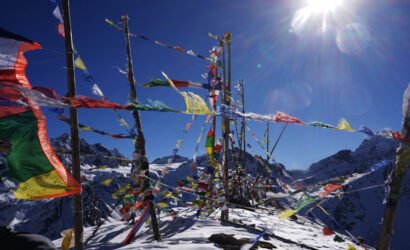
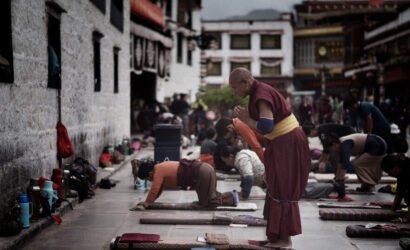
Tibet is a historical region covering much of the Tibetan Plateau in Central Asia. It is the traditional homeland of the Tibetan people as well as some other ethnic groups such as Monpa, Qiang, and Lhoba peoples and is now also inhabited by considerable numbers of Han Chinese and Hui people. Tibet is the highest region on Earth, with an average elevation of 4,900 metres (16,000 ft).[citation needed] The highest elevation in Tibet is Mount Everest, Earth’s highest mountain, rising 8,848 m (29,029 ft) above sea level.
The Tibetan Empire emerged in the 7th century, but with the fall of the empire the region soon divided into a variety of territories. The bulk of western and central Tibet was often at least nominally unified under a series of Tibetan governments in Lhasa, Shigatse, or nearby locations; these governments were at various times under Mongol and Chinese overlordship. Thus Tibet remained a suzerainty of the Mongol and later Chinese rulers in Nanjing and Beijing, with reasonable autonomy given to the Tibetan leaders.
A climbing peak may refer to a mountain or hill peak or a rock formation that has to be ascended by climbing. The term is common in Germany where it is specifically used of free-standing rock formations in the climbing regions of Saxon Switzerland, Zittau Mountains and other nearby ranges in the German Central Uplands that can only be submitted via climbing routes of at least grade I on the UIAA scale or by jumping from nearby rocks or massifs. As a general rule, they must have a topographic prominence of at least 10 meters to qualify. In Saxon Switzerland the Saxon Climbing Regulations do not require any minimum height, but define climbing peaks as
Another requirement is its recognition by the responsible sub-committee of the Saxon Climbers’ Federation (SBB) and the responsible conservation authorities. For hikers, these authorized summits may often be recognized by the presence of a summit register and abseiling anchor points.
Raja Boat Tour